

Key Benefits of Clinical Exercise
- Targeted rehabilitation from injury, surgery or illness.
- Improved posture, balance, strength and fitness.
- Improve muscular strength, flexibility and control.
- Improve pelvic floor activation, core strength and control.
- More efficient functional and sport-specific biomechanics.
- Pre and post natal care.
Better Bones
- Deadlifts
- Overhead presses
- Back squats
- Jumping chin-ups with drop landings
Strength and Conditioning
Strength and Conditioning classes are aimed at people who are looking to improve their physical fitness and performance through high-intensity resistance and cardiovascular training. You will work with your physiotherapist to achieve your goals (whether they be improving strength, your endurance, power or speed). World Health Organisation recommends that everyone complete at least 2 sessions of strength training each week. Classes are small group, circuit style with individalised components to meet your goals.
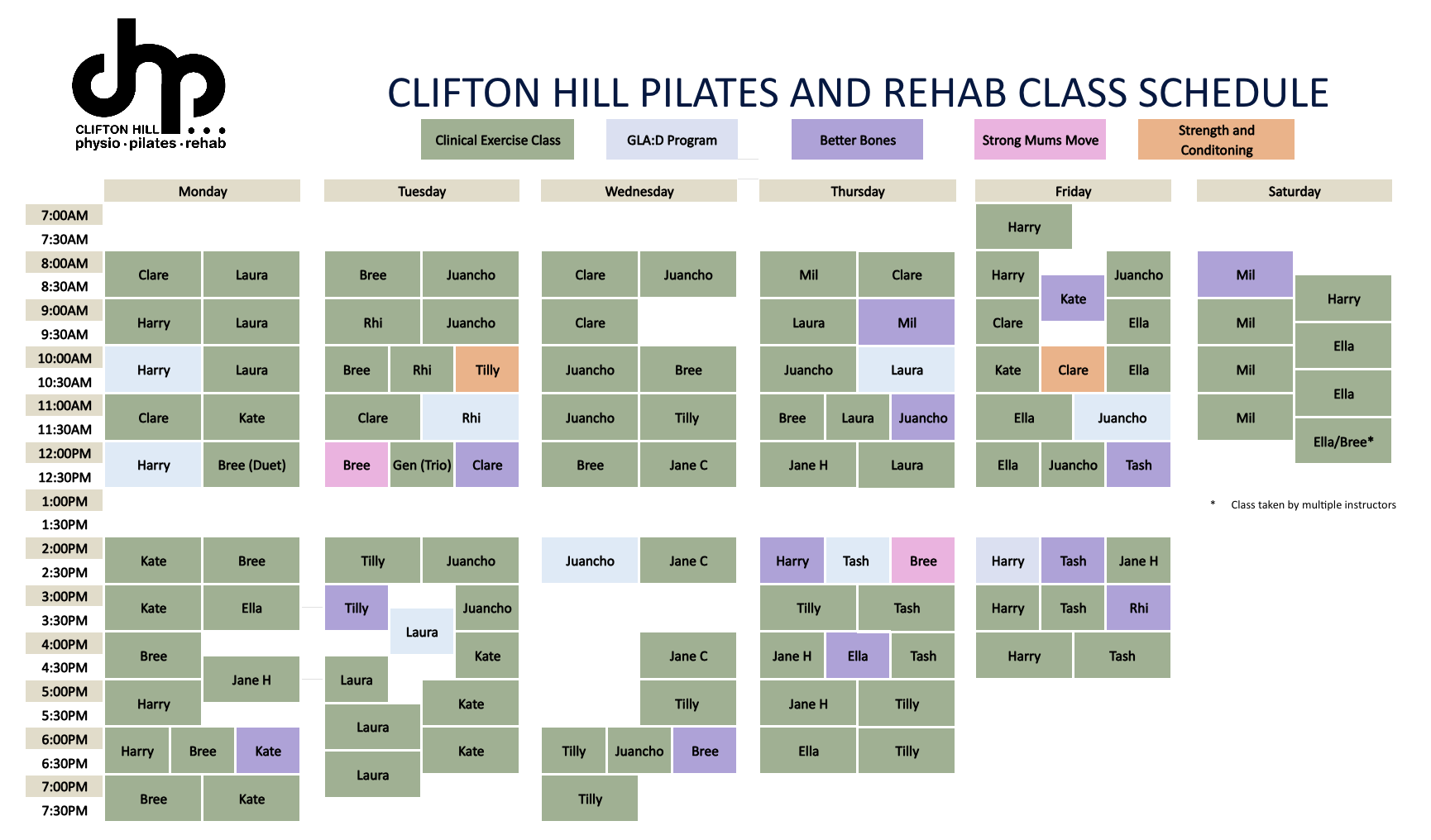
Clinical Exercise Timetable
Stay Updated
Stay connected to the latest news and information from Clifton Hill Physio.
Frequently Asked Questions
Yes. An initial assessment is required before commencing classes. This allows your physiotherapist to assess your injury and medical history, current symptoms, exercise experience, and individual goals. Based on this information, they will develop a personalised program tailored to your needs and ensure you can exercise safely and effectively. The assessment also gives you the opportunity to become familiar with the equipment, learn correct exercise technique, and ask any questions before joining a class. This helps ensure you feel confident, comfortable, and well supported from the outset.
- 1 group class per week for 6 weeks, or
- 2 group classes per week for 6 weeks.
- An initial assessment
- Two review sessions incorporating osteoarthritis education
- 12 group exercise classes (maximum 5 patients per physiotherapist)
No, our class packs are nonrefundable, however in some circumstances they are transferrable from one patient to another.
Yes. If your extras cover includes physiotherapy or exercise physiology, you can claim both your individual and group sessions. We recommend confirming your rebate amount with your fund, as this will vary depending on your level of cover.
Clinical Exercise Physiology is a specialised field focused on using exercise as a therapeutic tool to manage chronic diseases and health conditions.
Practitioners, known as clinical exercise physiologists, design and deliver exercise programs tailored to individual needs.
Clinical Exercise Physiology helps in treating a variety of conditions, including:
- Cardiovascular diseases (e.g., heart disease, hypertension)
- Metabolic disorders (e.g., diabetes, obesity)
- Musculoskeletal problems (e.g., arthritis, osteoporosis)
- Neurological conditions (e.g., stroke, Parkinson’s disease)
- Respiratory diseases (e.g., asthma, chronic obstructive pulmonary disease)
- Mental health conditions (e.g., depression, anxiety)
- Cancer recovery
- Chronic pain and fatigue syndromes
- Age-related issues (e.g., balance and mobility problems in older adults)
- Rehabilitation following surgery or injury
These programs aim to improve, restore, or maintain physical function, health, and wellness, particularly in populations with chronic conditions like heart disease, diabetes, and arthritis.